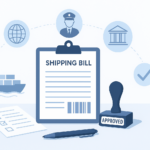
For Indian exporters, export compliance does not end with shipping the goods. Two critical post-export requirements—IRM (Inward Remittance Message) and eBRC (Electronic Bank Realisation Certificate)—play a key role in proving that export proceeds have been realised in India.
While these terms are often used interchangeably, they serve different purposes and follow a clear sequence. Understanding this flow helps exporters avoid delays, mismatches, and compliance issues.
What Is IRM (Inward Remittance Message)?
An IRM (Inward Remittance Message) is a confirmation generated by the Authorized Dealer (AD) bank when export proceeds are received in India from an overseas buyer.
It is the first official record of export payment realization and contains details such as:
- Exporter’s IEC
- Shipping bill reference
- Amount received
- Currency and conversion rate
- Date of remittance
Without IRM, the system does not recognize that payment has been received.
Why IRM Is Important for Exporters
IRM acts as the foundation for eBRC generation. Unless the bank uploads IRM details into its system and reports them to DGFT, the exporter will not be able to generate an eBRC.
IRM is essential for:
- Export incentive claims
- Closure of shipping bills in EDPMS
- DGFT compliance
- Audit and regulatory verification
In short, no IRM means no eBRC.
How IRM Flows into the eBRC System
Once the exporter receives payment:
- The AD bank records the inward remittance
- The bank generates the IRM
- IRM data is electronically transmitted to DGFT
- DGFT system links IRM with shipping bill data
- eBRC becomes available for self-generation
Any mismatch in this chain leads to delays.
What Is an eBRC?
An eBRC (Electronic Bank Realisation Certificate) is a digitally generated certificate issued through the DGFT portal confirming that export proceeds have been realised against a specific shipping bill.
Unlike traditional BRCs, eBRCs are:
- Fully digital
- Linked to customs and bank systems
- Instantly accessible once data is matched
When Can You Generate an eBRC?
You can generate an eBRC only when:
- Export proceeds are received
- IRM has been generated by the bank
- Bank has uploaded IRM data correctly
- Shipping bill details match bank records
If any of these conditions are not met, the eBRC will not appear on the portal.
How to Self-Generate eBRC on the DGFT Portal
Step 1: Log in to DGFT Portal
Log in using your IEC-linked credentials.
Step 2: Navigate to eBRC Services
Go to:
Services → eBRC → View / Print eBRC
Step 3: Search Shipping Bill Details
Enter:
- Shipping bill number
- Shipping bill date
- Port of export
- Financial year
Submit the details.
Step 4: Verify IRM Details
The system will display:
- IRM reference number
- Realised amount
- Bank name
- Date of realisation
Verify the details carefully.
Step 5: Generate eBRC
If data is correct:
- Select the shipping bill
- Click Generate eBRC
- Download or print the eBRC for records
Common IRM & eBRC Issues Exporters Face
- Bank has not uploaded IRM
- Incorrect IEC mapping
- Partial realisation not updated
- Mismatch between shipping bill and remittance amount
- Old shipping bills not linked properly
In such cases, exporters must coordinate with their AD bank for correction or re-upload of IRM data.
Compliance Tips for Smooth eBRC Generation
- Track inward remittances regularly
- Follow up with banks for timely IRM upload
- Ensure shipping bill data is accurate
- Monitor DGFT portal periodically
- Maintain records for audits and incentive claims
Conclusion
IRM and eBRC are two connected but distinct steps in the export realization process. While IRM confirms receipt of payment, eBRC serves as official proof for compliance and benefits. Understanding this flow helps exporters avoid unnecessary delays, improve compliance, and ensure smooth access to export incentives.
A proactive approach—regular follow-ups with banks and periodic portal checks—can make the entire process seamless.